


Picking the best protein powder for recovery comes down to a few simple things: how fast it digests, how much of key amino acids like leucine it packs, and if it fits your diet. Fast-acting proteins, like a good whey isolate, are usually the top choice because they rush those essential building blocks to your muscles right when they need them to repair and grow stronger.
Why Protein Is Your Ultimate Recovery Tool
Let’s get one thing straight about your workouts. You aren't building muscle while you're lifting, running, or pushing through that last rep. You're actually breaking your muscles down. The real growth, the magic, happens later—during recovery. And protein isn't just a helpful supplement here; it's the absolute star of the show.
Think of your muscle fibers as a brick wall. A tough workout is like taking a sledgehammer to it, leaving little cracks and chips everywhere. Protein acts as the mortar and fresh bricks, not just patching the holes but making the entire wall stronger than it was before. This repair-and-rebuild process has a name: Muscle Protein Synthesis (MPS). If you don't give your body enough protein, it’s like trying to patch that wall with sand. You’ll stay sore, feel drained, and your progress will grind to a halt.
The Science of Muscle Repair
Every time you exercise, you create tiny, microscopic tears in your muscle fibers. Don't worry, this is exactly what you want—it's the trigger for getting stronger. Your body senses this "damage" and immediately kicks off a repair process. To do the job right, it needs a steady supply of amino acids, which are the individual components of protein.
A quality protein powder is like an express delivery service, making sure these critical amino acids get to the construction site (your muscles) right when they're most ready to be rebuilt.
The timing of that delivery is everything. Not all proteins are created equal in this regard:
- Fast-Digesting Proteins: These get absorbed in a flash, flooding your muscles with amino acids to kickstart MPS almost immediately after you finish your workout.
- Slow-Digesting Proteins: These are more of a time-release formula. They drip-feed amino acids to your muscles over several hours, perfect for sustained recovery, like when you're sleeping.
Getting a handle on this difference is the first real step to picking a protein that will actually work for you.
"Your workout breaks down the muscle; your nutrition builds it back up. Protein isn't just a part of the equation—it's the primary variable that determines the quality of your recovery and the results you see."
A Booming Market for a Reason
The secret is out: protein is a game-changer for athletic performance. The global protein supplements market was valued at a massive USD 29.78 billion and is on track to nearly double by 2033. This isn't just hype. This explosive growth shows a widespread agreement among athletes, coaches, and weekend warriors alike: smart protein intake is non-negotiable if you want to recover properly and perform at your best. You can explore the market trends to see just how many athletes are putting recovery first.
This is about more than just feeling less sore tomorrow. Getting your protein right ensures all that sweat and effort in the gym actually turns into real, measurable results. It helps you bounce back faster so you can train again sooner and more consistently, making the path to your fitness goals that much smoother. Choosing the right protein is a direct investment in your performance.
Choosing Your Protein Source for Peak Recovery
When it comes to recovery, not all protein powders are created equal. Think of them like different types of fuel for your body. Some are like standard-grade gas, providing steady energy for the long haul. Others are high-octane racing fuel, designed for immediate, powerful results. Choosing the right one is key to how quickly and efficiently your muscles get back in the game.
The most popular and well-researched protein out there is whey, which is a natural byproduct of cheesemaking. But even within the whey family, there are different levels of refinement, each offering unique benefits for recovery. This lets you dial in exactly what your body needs based on your digestion and how fast you need to bounce back.
This diagram lays out the main protein categories to give you a clear picture of your options.
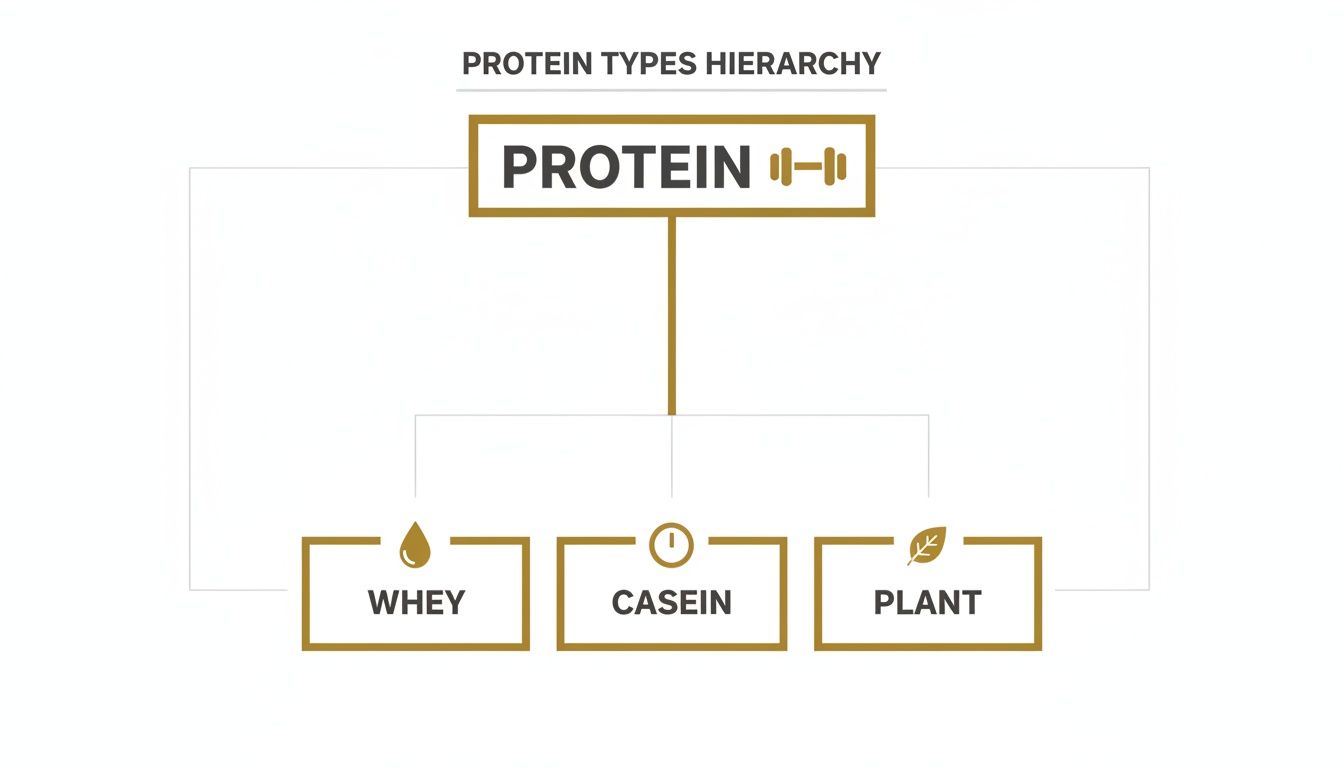
As you can see, the path starts with dairy-based proteins like whey and casein and branches out to include excellent plant-based alternatives.
The Whey Protein Family
Whey protein is the undisputed king of post-workout nutrition. It's so dominant that it accounts for roughly 45% of the entire protein market's revenue, making it the go-to for serious athletes and fitness pros. Why? Because its amino acid profile is second to none, especially its high concentration of leucine—the critical amino acid that flips the switch on muscle protein synthesis, the very process that rebuilds your muscles after a tough session. You can read more about what's driving the protein market on GlobeNewswire.
Let’s break down the three main players:
- Whey Concentrate: This is the most common and least processed version. It delivers a solid protein punch (around 70-80%) but also contains some naturally occurring fats and lactose. It's a great, budget-friendly choice for general recovery.
- Whey Isolate: This is a more purified form. It goes through an extra filtering step that strips out most of the fat and lactose, bumping the protein content up to 90% or more. This makes it an ideal pick if you have mild lactose sensitivity or simply want a cleaner protein source to fuel muscle repair. You can learn more about whey isolate in our detailed guide.
- Whey Hydrolysate: Think of this as the "pre-digested" whey. The protein chains have been broken down into smaller fragments called peptides, which means your body can absorb them almost instantly. For elite athletes needing to kickstart recovery the second they finish their workout, hydrolysate is the top-tier option.
Our T2LF SUPPLEMENTS Pure3 100% Whey Protein Isolate was engineered with this rapid absorption in mind. By delivering a clean, high-purity protein, it helps guarantee your muscles get the essential building blocks they're screaming for, right when it matters most.
Casein: The Slow-Release Option
If whey is the sprinter, casein is the marathon runner. Casein, which also comes from milk, has a unique property: it forms a gel in the stomach. This slows down digestion dramatically, creating a slow, steady release of amino acids into your bloodstream.
This "drip-feed" effect makes casein perfect for sustained recovery, especially overnight. Taking it before bed helps fend off muscle breakdown while you sleep, keeping your body in a muscle-building state for hours on end.
Think of casein as your overnight construction crew. While fast-acting whey is great for that immediate post-workout patch-up, casein works through the night to ensure the rebuilding project continues, making it a powerful tool for 24/7 recovery.
Plant-Based Blends: A Powerful Alternative
Gone are the days when choosing a plant-based protein felt like a compromise. Early versions often relied on a single plant source, which meant they sometimes lacked a complete amino acid profile. Today, the best protein powder for recovery in the plant-based world is almost always a strategic blend.
By combining complementary proteins like pea and rice, manufacturers can create a complete amino acid profile that stands toe-to-toe with whey.
- Pea Protein: Naturally high in branched-chain amino acids (BCAAs), which are absolutely vital for repairing muscle tissue.
- Rice Protein: Fills in the gaps by providing the other essential amino acids that pea protein might be lower in.
This smart combination ensures that plant-based athletes get every component needed to trigger effective muscle protein synthesis. Formulations like our T2LF SUPPLEMENTS Vegan Protein are designed with these synergistic blends, offering a potent, dairy-free recovery solution without sacrificing an ounce of performance. It's a fantastic choice for vegans, anyone with dairy allergies, or someone just looking to add more plant-based nutrition to their diet.
Key Ingredients That Supercharge Recovery
A truly elite recovery formula is much more than a simple scoop of protein. Think of protein as the essential bricks for rebuilding muscle. But to get the job done right, you also need a skilled construction crew, specialized tools, and a reliable power source. The other ingredients in a recovery blend are that crew, making the entire process faster and more effective.
The best protein powder for recovery is almost always a thoughtfully designed blend. It combines high-quality protein with other key players that work together to slash soreness, top off your energy stores, and get you back in the game sooner. Let’s meet the all-stars that take a protein powder from good to great.
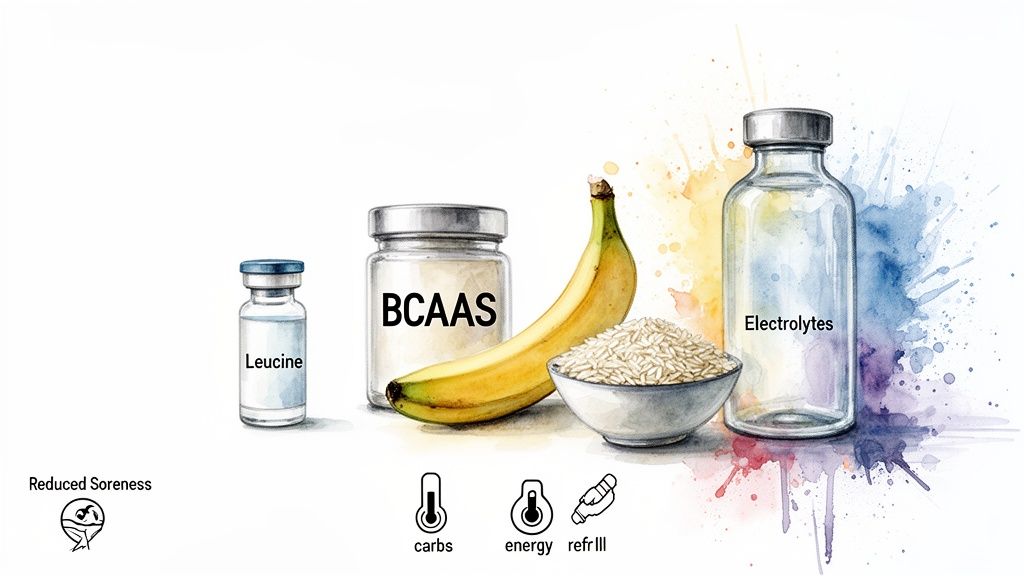
Leucine: The Master Switch for Muscle Growth
If you imagine muscle protein synthesis as a powerful engine, leucine is the key that turns the ignition. It’s one of the three branched-chain amino acids (BCAAs), but it has a special job: it’s the primary trigger for the entire muscle-building process. When you get enough leucine after a workout, it sends a loud and clear signal to your body to start repairing and growing.
Here’s a simple way to picture it: your muscle cells have a "start building" button that's locked behind a keypad. Leucine is the specific access code that unlocks it, giving all the other amino acids the green light to get to work. Research consistently shows that a post-workout shake should contain 2.5 to 3 grams of leucine to really kick this process into high gear. This is a big reason why whey protein, which is naturally loaded with leucine, is a go-to choice for so many athletes.
BCAAs: The Muscle Protection Crew
While leucine is busy starting the engine, the other two BCAAs—isoleucine and valine—are the essential pit crew. This trio works together to protect your hard-earned muscle and fend off that dreaded post-workout ache.
Here’s a quick rundown of what they do:
- Fight Muscle Soreness: BCAAs can help take the edge off delayed onset muscle soreness (DOMS) by minimizing the microscopic damage that exercise causes to muscle fibers.
- Combat Fatigue: It's not just your muscles that get tired during a long session; your brain does, too. BCAAs can help reduce feelings of mental fatigue by competing with another amino acid, tryptophan, for entry into the brain.
- Prevent Muscle Breakdown: If your body is running low on fuel, it might start breaking down muscle tissue for energy. BCAAs offer an alternative energy source, helping to spare your muscle mass.
Carbohydrates: The Essential Refuel
It’s easy to get tunnel vision about protein, but don’t forget its most important partner: carbohydrates. After a grueling workout, your muscles' main fuel tanks, called glycogen stores, are running on fumes. Downing some carbs with your protein is the quickest way to top them off.
Refueling your glycogen is crucial for a couple of reasons. First, it helps your muscles get their strength and stamina back, setting you up for success in your next session. Second, eating carbs triggers an insulin response, which acts like a shuttle service, helping to drive both glucose and amino acids into your muscle cells more efficiently.
"Skipping post-workout carbs is like fixing a damaged wall but forgetting to restock the building supplies for the next day's work. Protein repairs the muscle, but carbs refuel it for future performance."
A smart recovery formula, like those offered by T2LF SUPPLEMENTS, will often include a balanced ratio of protein to carbs. This ensures you're not just patching up the muscle but also restocking the energy it needs to perform.
Electrolytes: The Hydration and Function Regulators
When you sweat, you’re losing more than just water. You're also losing critical minerals called electrolytes, like sodium, potassium, calcium, and magnesium. These guys are essential for countless functions in your body.
Electrolytes are the unsung heroes responsible for:
- Keeping your fluid balance and hydration in check.
- Regulating nerve signals and muscle contractions (which is key to preventing cramps).
- Supporting proper function at the cellular level.
Just drinking water often isn't enough to rehydrate properly. You have to replace those lost electrolytes to restore balance and make sure your muscles can function and recover at their best. Some of the most advanced recovery formulas include an electrolyte blend for exactly this reason, offering a complete solution for your post-exercise needs. Another amino acid that supports hydration and recovery is glutamine; you can learn more about L-glutamine powder and its benefits for athletes.
Matching Your Protein to Your Fitness Goals
Let's get one thing straight: there's no single "best" protein powder for everyone. The ideal recovery shake for a powerlifter chasing a new PR is going to look very different from what a marathon runner needs to bounce back after a 20-miler. This is where we stop talking about the general science and start building a plan that works for you.
Your training style, personal dietary needs, and what you’re trying to achieve all come into play. When you line up your protein choice with these factors, you can be confident every scoop is moving you closer to your goal.
Strength Athletes and Muscle Growth
When your world revolves around building muscle and getting stronger, your recovery has one primary mission: crank up muscle protein synthesis (MPS) as high as it will go. To do that, you need a fast-hitting protein that’s absolutely packed with the amino acids that signal growth, especially leucine.
This is where whey protein, specifically a high-quality whey protein isolate, absolutely dominates. It’s the undisputed champion for post-lift recovery because it absorbs incredibly fast and is loaded with BCAAs.
- Priority: Kicking off muscle repair and growth as fast as possible.
- Best Protein Choice: Whey Isolate or Hydrolysate.
- Why It Works: These proteins flood your muscles with amino acids almost instantly, putting MPS into overdrive right when your body is most receptive.
Our T2LF SUPPLEMENTS Pure3 100% Whey Protein Isolate was engineered with exactly this in mind. It delivers a clean, fast-digesting shot of pure protein to fuel immediate repair and help you come back stronger than before.
Endurance Athletes and Glycogen Replenishment
If you're a runner, cyclist, or swimmer, your recovery is a two-part job. Yes, you need to repair the muscle damage from all that repetitive motion, but you also have to refill the massive energy (glycogen) stores you just burned through.
For you, a protein powder that also contains carbohydrates is the smarter choice. The protein gets to work on muscle repair, while the carbs focus on restocking your fuel tanks so you aren't running on empty for your next session.
"For endurance athletes, a protein-only recovery shake is like changing the oil in your car but forgetting to put gas in the tank. You need both—protein for the engine repair and carbs for the fuel—to make sure the whole system is ready to go again."
Look for formulas that have a protein-to-carb ratio somewhere around 1:2 or 1:3. This combination has been shown to dramatically speed up glycogen replenishment and improve overall recovery.
To help you find the perfect match, we've put together a simple checklist.
Protein Selection Checklist for Your Fitness Goal
This table breaks down which protein type and features best align with common training goals and dietary considerations, making your decision a whole lot easier.
| Your Goal or Need | Recommended Protein Type | Key Features to Look For | T2LF Solution |
|---|---|---|---|
| Build Maximum Muscle & Strength | Whey Protein Isolate or Hydrolysate | High leucine content, rapid absorption, minimal carbs/fats | T2LF Pure3 100% Whey Protein Isolate |
| Endurance Recovery | Protein + Carbohydrate Blend | 1:2 or 1:3 protein-to-carb ratio, electrolytes | Combine T2LF protein with a carbohydrate source post-workout. |
| Lactose Intolerance | Whey Protein Isolate or Plant-Based | >90% protein by weight (for isolate), zero dairy | T2LF Pure3 100% Whey Protein Isolate is extremely low in lactose. |
| Vegan or Dairy-Free Diet | Plant-Based Protein Blend | Multi-source blend (e.g., pea + rice) for a complete amino acid profile | T2LF SUPPLEMENTS Vegan Protein |
| General Health & Wellness | Whey Concentrate, Casein, or Plant-Based | Balanced profile, great taste, minimal added ingredients | T2LF SUPPLEMENTS Vegan Protein or a high-quality whey. |
Ultimately, the best protein is the one that fits your body, your training, and your lifestyle. Use this as your guide to make an informed choice that truly supports your efforts.
Dietary Needs and Allergen Sensitivities
Your personal dietary rules are non-negotiable, but thankfully, you don’t have to compromise on quality to meet them.
- Lactose Intolerance: If dairy doesn't agree with you, whey protein isolate is often a game-changer. The intensive filtering process strips out almost all the lactose, making it easy to digest even for many people with sensitivities.
- Vegan Athletes: A top-tier plant-based blend is your best bet. Look for a combination of sources like pea and rice protein to ensure you're getting a complete amino acid profile that can stand toe-to-toe with whey. Our T2LF SUPPLEMENTS Vegan Protein delivers exactly that—a powerful, dairy-free solution without compromise.
The Growing Demand for Clean Labels
As athletes get smarter, the demand for transparency has gone through the roof. People just aren't willing to settle for proprietary blends or formulas full of artificial junk anymore.
You can see this shift clearly in the market data. The natural protein powder segment is expected to grow at a blistering 9.07% CAGR, blowing past the rest of the market. This sends a powerful message: consumers want clean, simple, and effective recovery solutions. You can read more about the growth of natural protein powders in this market analysis.
This is the very reason we prioritize clean labels and transparent formulas at T2LF SUPPLEMENTS. We believe you have a right to know exactly what you’re putting into your body. Your recovery should be powered by pure, proven ingredients that push you toward your goals, not hold you back.
Nail Your Protein Timing for the Best Results
For years, the fitness world has been obsessed with one question: when should you drink your protein shake? This led to the legend of the "anabolic window"—a supposedly magical 30-minute period post-workout where you had to slam a shake or risk losing all your gains. It created a mad dash from the squat rack to the shaker bottle.
While getting protein in after you train is definitely a good move, we now know that this "window" isn't a tiny porthole that slams shut. It's much bigger and more forgiving than we thought.
The real key to muscle recovery isn't one perfectly timed shake. It's your total daily protein intake. Think of it this way: rebuilding muscle is a 24/7 construction job, not a 30-minute frenzy. A post-workout shake is like a rush delivery of bricks and mortar, but the crew needs a steady supply of materials all day long to keep the project moving.
Hitting your daily protein target ensures that your body has the amino acids it needs for that ongoing repair work, which continues for hours—and even days—after a tough workout.
Figuring Out Your Daily Protein Needs
Okay, so how much protein is "enough"? It really depends on your body and your activity level. Someone hitting the gym a couple of times a week has different requirements than an athlete training for hours every day.
For active people focused on building muscle and recovering well, a solid, science-backed target is 1.6 to 2.2 grams of protein per kilogram of body weight per day. If you weigh 180 pounds (about 82 kg), that means you should be aiming for somewhere between 131 to 180 grams of protein daily.
The number one rule is to hit your total daily protein goal. Think of it as a budget for muscle repair. Your post-workout shake is one important line item, but you still need to meet the full budget by the end of the day to get the best returns on your effort.
This approach gives your muscles a consistent stream of building blocks, not just a quick dump right after you train. Spreading that intake out over the day is how you keep muscle protein synthesis humming along.
How to Build a Smart Protein Routine
Knowing your daily number is step one. Building a consistent routine around it is where the magic happens. Instead of just chugging a shake and moving on, focus on spacing out your protein intake to keep your muscles in a constant state of growth and repair.
Here's a simple, effective way to structure your day:
- Kickstart with Protein: A protein-heavy breakfast is a great way to flip the switch from muscle breakdown (which can happen overnight) to muscle building.
- Spread it Out: Aim for 20-40 grams of high-quality protein at each main meal—breakfast, lunch, and dinner. This keeps a steady flow of amino acids available to your muscles.
- Use Your Shake Strategically: That post-workout shake is the perfect way to nail one of your 20-40 gram servings. A scoop of T2LF SUPPLEMENTS Pure3 Whey Isolate is a super convenient and effective way to jumpstart the repair process right after a workout.
- Consider a Pre-Bed Boost: To support recovery while you sleep, a slow-digesting protein can be a game-changer. Think a casein shake or a simple snack like Greek yogurt.
By following this plan, you turn your protein intake from a single post-workout event into a powerful, all-day recovery strategy. When you focus on the big picture—your total daily protein—and spread it out, you create the absolute best environment for your muscles to repair, grow, and come back stronger.
How to Spot a High-Quality Protein Powder
Walking down the supplement aisle can be completely overwhelming. You're faced with a wall of tubs, all plastered with impressive claims and flashy labels. So, how do you cut through the noise to find a clean, effective protein that will actually help you recover?
It all comes down to knowing what to look for. Let's turn you into a label-reading pro.
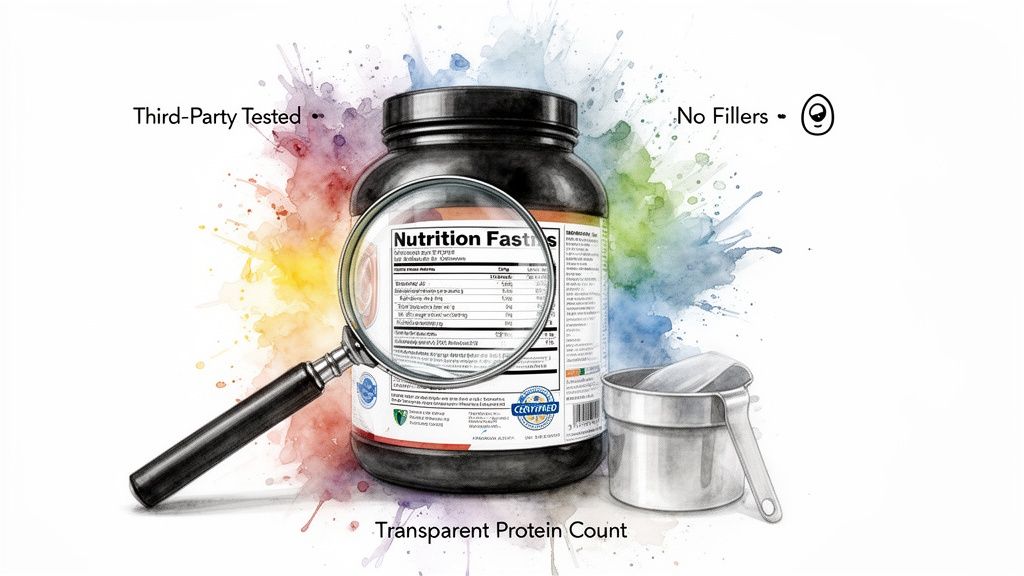
First thing's first: flip that tub around and scan the ingredients. Less is almost always more. A top-tier product should have a short, simple list with the protein source—like whey protein isolate or a plant blend—right at the very top.
If you see a laundry list of chemical-sounding names, artificial sweeteners, colors, or fillers, put it back on the shelf. That stuff adds zero nutritional value and can even get in the way of your recovery.
Decode the Nutrition Label
After a quick ingredient check, your eyes should go straight to the nutrition facts panel. This is where the real story is told and where you can separate the good from the garbage.
- What to Look For: A solid protein count of at least 20-25 grams per serving. Even better is a detailed amino acid profile, which shows the brand isn’t hiding anything.
- What to Avoid: The biggest red flag is the term "proprietary blend." This is a classic industry trick that allows companies to obscure the exact amount of each ingredient, leaving you to guess if you're getting an effective dose of what actually matters.
The best brands are proud of their formulas and will list every ingredient and its exact dosage clearly. If a company isn't transparent about what's in their product, you should question why.
A clean formula, like the one we created for our T2LF SUPPLEMENTS PURE3 100% Whey Protein Isolate, is built on a minimal ingredient list. The entire focus is on delivering a high-purity protein source without the junk, so every single scoop is working for you. You can see an example of a clean, transparent label on our product page to know what to look for.
The Gold Standard of Purity
So, how do you really know that what’s on the label is what’s in the tub? This is where third-party testing becomes absolutely essential. Think of these independent certifications as your ultimate guarantee of quality and safety.
Look for these seals of approval on the label:
- NSF Certified for Sport: This is one of the most rigorous certifications out there. It confirms the product contains what the label says, is free of contaminants, and has been tested for more than 270 substances banned by major sports organizations.
- Informed-Choice / Informed-Sport: These programs test every single batch for banned substances before it ever hits the market. For competitive athletes, this is non-negotiable peace of mind.
When you choose a product with third-party testing, you're not just buying a protein powder; you're investing in a brand that's committed to the highest possible standards. It's the clearest sign that a company stands behind its promises.
Your Top Protein Recovery Questions, Answered
Even when you've got your recovery dialed in, a few questions always seem to linger. Let's clear up some of the most common ones so you can move forward with total confidence in your post-workout plan.
Can I Just Get My Recovery Protein from Food?
The short answer is yes, you could. Whole foods like chicken, eggs, and Greek yogurt are fantastic protein sources. But here's the catch: getting the ideal 20-40 grams of protein into your system right after a tough workout can be a real challenge with solid food.
This is where a high-quality protein powder has a serious edge in convenience and, more importantly, speed.
A shake is absorbed far more quickly than a chicken breast, rushing those essential amino acids to your muscles precisely when they're screaming for repair. Think of it as an express lane for recovery. That post-workout meal is still a great idea an hour or two later, but a shake is the fastest way to flip the switch from breakdown to rebuilding.
Is Protein Powder Going to Make Me Bulky?
This is probably the biggest myth in the gym, especially for women. Let me be clear: no. A protein shake won't magically make you bulky.
Protein powder is just a concentrated food source designed to help repair muscle tissue. Gaining significant bulk—the kind bodybuilders work for—requires a massive calorie surplus and a very specific, heavy lifting program sustained over a long time.
For most of us, using a protein powder for recovery simply helps us build a leaner, stronger, and more defined physique. It’s not about adding size; it’s about efficiently repairing the muscle you’ve just worked.
Building bulk is a direct result of total calorie intake and a targeted training style. A protein shake helps you recover from your workout—it doesn't automatically add mass where you don't want it.
How Do I Know if My Recovery Is Actually Getting Better?
Your body is the best feedback tool you have. While you won't feel like a new person overnight, nailing your post-workout nutrition with the best protein powder for recovery will lead to some very real, noticeable improvements.
Here’s what to look for:
- You're Less Sore: That familiar post-workout ache (hello, DOMS) starts to feel less intense. You might notice it doesn't stick around for as long, either.
- Your Next Workout Feels Stronger: You show up to your next session feeling more prepared and powerful. Maybe you hit all your reps without struggling on the last set or just feel like you have more in the tank.
- Your Energy Is More Stable: Proper recovery helps you sidestep those brutal energy crashes that can hit a few hours after a hard workout, keeping you more level throughout the day.
Keep an eye on these simple signs. They're the clearest indicators that your recovery strategy is paying off.
Ready to feel the difference a premium recovery supplement can make? T2LF SUPPLEMENTS offers clean, effective, and transparently formulated protein powders designed to help you bounce back faster and train harder. Discover what drives your strength and explore our complete collection.
