


When you hear people talk about whey protein isolate (WPI), they’re talking about the purest, most refined form of whey you can get. It’s standardized to contain at least 90% protein by weight, which is why athletes and serious trainees often think of it as premium, high-octane fuel for their muscles.
Your Quick Guide to Whey Protein Isolate
To really get what WPI is, it helps to understand where it comes from. It all starts with milk. Milk has two main proteins: casein and whey. During the cheesemaking process, the whey is separated out as a liquid. This liquid then goes through several filtering stages to produce the different whey powders you see on the shelves.
A standard whey concentrate is a fantastic protein source, but isolate takes it to another level of purity. It undergoes an advanced filtration process, like cross-flow microfiltration, which strips out almost all the fat, carbohydrates, and lactose. This meticulous process is exactly why WPI has such a stellar reputation—it’s the top choice for anyone wanting to build lean muscle without adding extra calories or worrying about digestive issues. You can even see its growing popularity reflected in market reports, like this one on the whey protein isolate market from Grandview Research.
Comparing Isolate to Other Proteins
The biggest differences between protein types really boil down to their nutritional stats and how your body processes them. Isolate’s major advantages are its incredibly high protein content and how quickly your body can absorb it, making it the perfect partner for post-workout recovery.
Key Takeaway: Choose whey protein isolate when you need the purest protein, the fastest digestion, and the lowest lactose content. It's the premium option for getting the most protein in every scoop while keeping fats and carbs to a minimum.
To make things even clearer, let's look at how whey isolate stacks up against two other popular dairy proteins.
Whey Protein Isolate vs Other Proteins at a Glance
This table gives you a quick side-by-side comparison to help you see the unique role each protein plays.
| Attribute | Whey Protein Isolate (WPI) | Whey Protein Concentrate (WPC) | Casein Protein |
|---|---|---|---|
| Protein Content | 90% or higher | 70-80% | ~80% |
| Digestion Speed | Very Fast | Fast | Very Slow |
| Lactose Content | Very Low | Low to Moderate | Low to Moderate |
| Best Use Case | Post-workout recovery | Anytime protein boost | Before bed or between meals |
As you can see, each protein has its place. WPC is a great all-rounder, and casein is perfect for slow, sustained protein release. But when it comes to rapid muscle repair right after a tough workout, WPI's profile is tailor-made for the job.
You can see how these different proteins are used to create targeted formulas in these high-quality protein blends.
The Journey from Milk to Pure Muscle Fuel
Ever wonder how that clean, fine powder in your shaker bottle starts its life? Every scoop of whey protein isolate begins as simple, fresh milk. To really get what whey isolate is, you have to follow its path from the farm to the highly refined fuel it becomes. It’s a story of purification, step-by-step, to strip away everything that isn't pure, muscle-building protein.
It all kicks off with cheesemaking. When specific enzymes are added to milk, it splits into two parts: the solid curds, which go on to become cheese, and the watery liquid left over. For ages, this liquid, called whey, was just a byproduct. Now we know it’s a goldmine of high-quality, fast-digesting proteins.
This infographic breaks down the simple, three-stage refinement process.
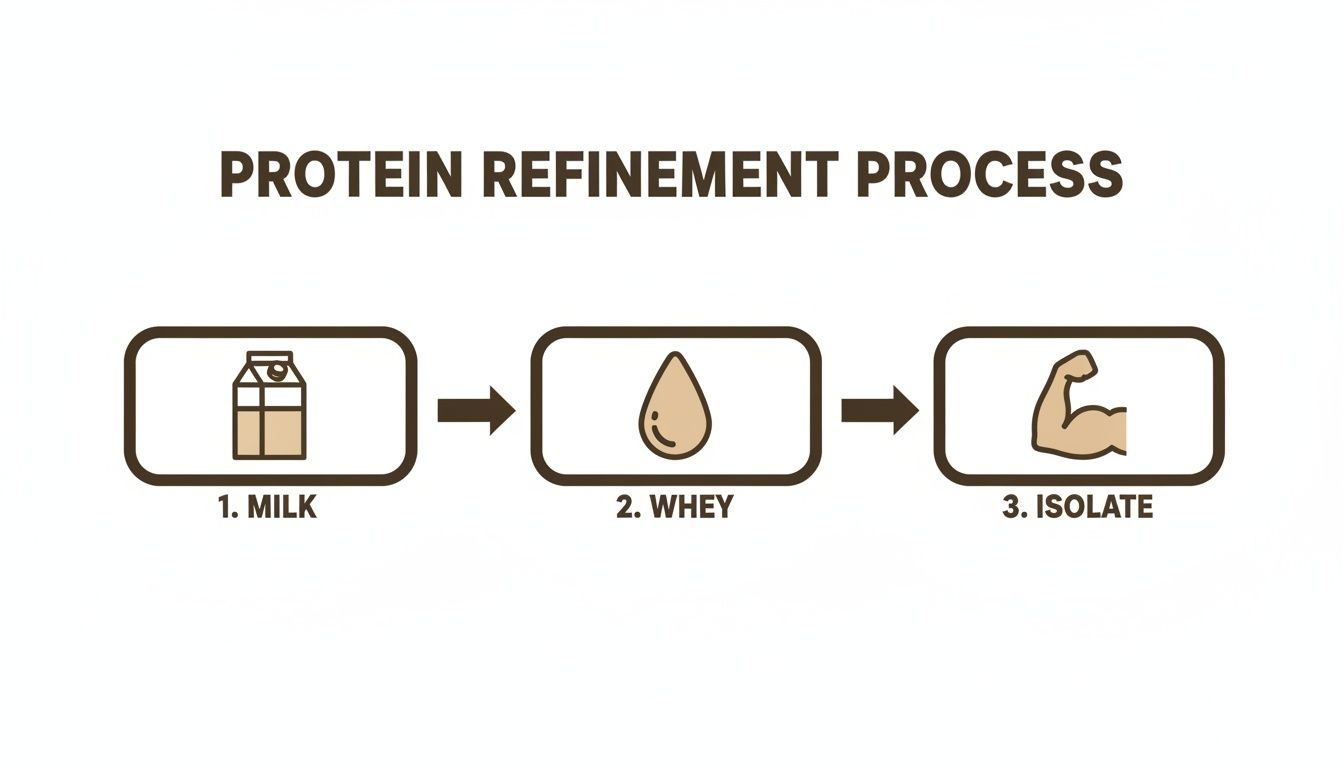
As you can see, each step cleans things up a bit more, leading to that ultra-concentrated isolate form.
The Critical Filtration Step
Once collected, the liquid whey gets its first round of filtration to become whey protein concentrate (WPC), which sheds some of the initial fat and lactose. But to reach the superior purity of an isolate, the process has to go further. This is where a game-changing technique called cross-flow microfiltration steps in.
Imagine using an incredibly fine kitchen sieve to sift flour over and over. Each pass removes smaller impurities, leaving you with only the finest, purest powder. Cross-flow microfiltration is like that, but on a microscopic scale. The liquid whey is pushed across specialized ceramic membranes that are just porous enough to let water, fats, and lactose escape, but small enough to trap the much larger protein molecules.
It’s a gentle, low-temperature process, which is key to preserving the protein’s natural, undamaged structure and keeping its biological benefits intact.
Why Purity Matters: This intense filtration is what gives whey protein isolate its premium reputation. By stripping out nearly all the lactose and fat, you get a product that is over 90% pure protein. This makes it the perfect choice for anyone with a sensitive stomach or who is just laser-focused on getting the cleanest nutrients possible.
From Liquid to Powder
After the extensive filtration, the now-concentrated liquid protein is gently spray-dried. This careful final step turns it into the fine powder you recognize, ensuring the protein stays stable, mixes easily into your drink, and keeps its complete amino acid profile ready to go to work.
The result? A product engineered for lightning-fast absorption and maximum impact. This meticulous journey from cow to container is exactly what makes whey protein isolate a top-tier choice for fueling recovery and building a leaner, stronger body.
Isolate vs. Concentrate: What the Differences Mean for You
When you’re staring at a wall of protein tubs, the choice between whey isolate and whey concentrate can feel a little overwhelming. But honestly, it all boils down to three things: how pure you need your protein, how your stomach handles dairy, and what your specific goals are.
Both are fantastic sources of high-quality protein, no question. The real difference is in the manufacturing process.
Think of whey concentrate as the dependable workhorse. It’s effective, gets the job done, and is usually easier on the wallet. Isolate, on the other hand, is the specialist—it goes through an extra round of filtration to create a more refined, targeted product.
Protein Purity and Potency
The biggest, most straightforward difference is the protein content. By definition, whey protein isolate has to be at least 90% protein by weight. This is thanks to a filtration process that strips out nearly all of the fat and carbohydrates (including lactose).
Whey concentrate lands somewhere between 70-80% protein, with the rest being those naturally occurring fats and carbs from the milk it started as.
For anyone on a strict diet or meticulously tracking macros to build lean muscle, that higher purity in isolate is a huge win. Gram for gram, you’re getting more of what you want (protein) and less of what you don’t.
Digestion and Lactose Levels
Ever had a protein shake leave you feeling bloated or just... off? Lactose is often the culprit. This is where whey isolate really separates itself from the pack.
That extra filtration doesn't just boost protein content; it also removes the vast majority of lactose, the sugar found in milk.
This makes isolate a game-changer for people with lactose sensitivity or full-blown intolerance. While concentrate is still fairly low in lactose, it has enough to cause issues for some. If you have a sensitive gut, the ultra-low lactose in isolate can make all the difference between a great recovery tool and an uncomfortable afternoon.
To give you a clearer picture, let's break down the key differences side-by-side.
Detailed Breakdown: Whey Isolate vs Whey Concentrate
This table offers a clear comparison of what you get in a typical serving of each.
| Feature | Whey Protein Isolate (WPI) | Whey Protein Concentrate (WPC) |
|---|---|---|
| Protein Content | 90% or higher by weight | 70-80% by weight |
| Lactose Content | Very low (often <1%) | Low to moderate |
| Fat Content | Very low (often <1%) | Low |
| Carbohydrate Content | Very low (often <1%) | Low |
| Absorption Speed | Very fast | Fast |
| Best For | Lean muscle gain, post-workout, lactose sensitive individuals, strict diets | General muscle building, daily protein intake, budget-conscious users |
| Price Point | Higher | Lower |
As you can see, the choice isn't about one being "good" and the other "bad." It's about precision versus value, and which profile better aligns with your specific needs.
Absorption Speed and Recovery
Both types of whey are known for getting to your muscles quickly, but isolate has a slight edge here, too. Because it’s been stripped of most fats and carbs that can slow down digestion, its amino acids can get to work repairing muscle tissue just a little bit faster.
This makes it an almost perfect choice for that critical post-workout window, when your muscles are screaming for nutrients to kickstart the recovery and growth process.
This demand for fast-acting, high-purity protein is why the market is booming. The global whey protein market is expected to climb from $9.1 billion in 2025 to $12.9 billion by 2030, with isolate leading the way for serious athletes and health-focused consumers. For a deeper dive into these market trends, you can find more information over on OpenPR.com.
The Core Decision: Choose concentrate for a solid, budget-friendly protein source; choose isolate when purity, speed, and easy digestion are your top priorities.
Ultimately, there's no single "better" option. The right choice is the one that best fits your body, your goals, and your budget. By understanding these differences, you can make a smart, informed decision that will actually help you on your fitness journey.
What Whey Isolate Actually Does For You
It's one thing to understand the science behind whey protein isolate, but it’s another thing entirely to see how that translates into actual, real-world results. The benefits of this ultra-pure protein go way beyond the numbers on a nutrition label. We're talking about tangible progress you can see in the mirror and feel in the gym.
So, let's break down the key advantages that make whey isolate a go-to supplement for anyone serious about their physique.
Faster Muscle Repair and Growth
The number one reason athletes and gym-goers swear by whey protein isolate is its incredible speed. After a tough workout, your muscle fibers are torn and screaming for amino acids—the building blocks of protein—to patch themselves up and grow back stronger.
Because isolate digests so quickly, it floods your muscles with these essential amino acids almost immediately. This rapid delivery kicks off muscle protein synthesis (MPS), which is the scientific term for the actual process of building muscle. Think of it like calling in an elite repair crew to a job site the second the work is done. Rebuilding starts right away, no delays.
Sharper Lean Muscle Definition
Getting that lean, sculpted look isn't just about building muscle; it's about shedding the body fat that covers it up. This is where isolate's purity really shines. By filtering out virtually all the fats, carbs, and sugars, you get a straight shot of protein without the extra calories that can sabotage your fat-loss efforts.
This makes it the perfect tool if you're watching your calories. You can feed your muscles exactly what they need to grow and stay put, all without derailing your diet. The cleaner your protein, the cleaner your results—it’s that simple.
Key Insight: Whey protein isolate gives you pinpoint control over your nutrition. You can jack up your protein intake to support lean mass while keeping your carb and fat numbers exactly where you need them, which is absolutely critical for changing your body composition.
Quicker Recovery Times
One of the first things people notice when they switch to whey isolate is that they aren't as sore for as long. By rushing nutrients to your muscles right after you train, isolate helps reduce the muscle damage that leaves you aching for days.
What does that mean for you? It means you can get back into the gym sooner and train harder. Instead of being sidelined by crippling soreness, you'll feel ready to go again, leading to more consistent, faster progress over time. For more on getting the most out of your efforts, check out our guide on the best supplements for muscle growth.
Better Weight Management Support
Finally, whey isolate is a powerful ally when it comes to managing your weight. We all know protein is the most filling macronutrient, and a quick isolate shake can crush hunger and keep cravings at bay.
This helps you stay full and satisfied, making it way easier to stick to your nutrition plan and avoid reaching for junk food. Plus, when you're in a calorie deficit to lose fat, getting enough protein is crucial to make sure you don't lose your hard-earned muscle along with it. Isolate helps you hang on to that muscle, so the weight you drop is fat, not strength.
How to Use Whey Isolate for Maximum Impact
Knowing what whey isolate is and how it works is half the battle. The other half? Knowing exactly how to use it to get the results you’re after. After all, a great supplement is only as good as the strategy behind it. Consider this your practical playbook for turning every single scoop into real, measurable progress.
We'll break down the essentials: how much to take, when to take it, and what to mix it with.
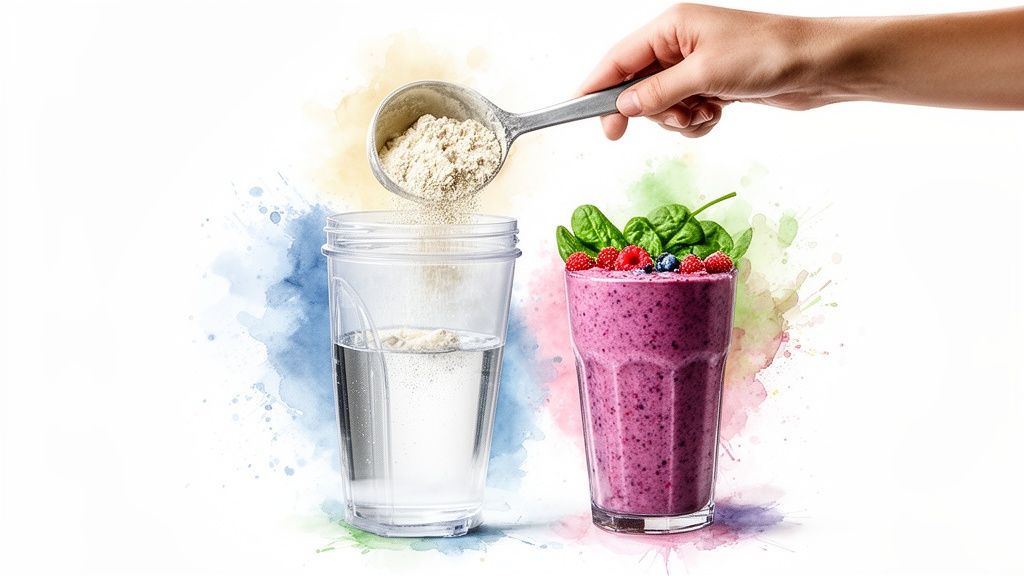
Let's get this knowledge into a routine that actually drives results.
Nailing Your Daily Dosage
The first question that usually comes up is, "So, how much do I take?"
There's no single magic number that fits everyone, but a solid starting point for most active people is 20–25 grams of whey isolate in a single serving. This amount is widely recognized as the sweet spot for kicking off muscle protein synthesis—the critical process that repairs and rebuilds muscle after you train.
Of course, that’s just one serving. Your total daily protein intake is the bigger picture. If your goal is to build muscle, you should be aiming for somewhere around 1.6 to 2.2 grams of protein per kilogram of body weight each day. Whey isolate is simply a super-efficient tool to help you hit that target without loading up on extra fats or carbs.
The Right Time for the Best Results
Because whey isolate absorbs so quickly, when you take it can make a real difference. While you can technically drink a shake anytime to bump up your protein intake, there are a few key moments where it really shines.
- The Post-Workout Window: This is prime time. Having a shake within 30 to 60 minutes after you finish training sends a flood of amino acids directly to your muscles when they're most receptive. This is huge for maximizing recovery and growth.
- First Thing in the Morning: Your body enters a catabolic (muscle-breakdown) state overnight while you sleep. A fast-acting isolate shake first thing in the morning can quickly flip that switch back to muscle-building mode.
- Before Your Workout: A serving about 30 minutes before you hit the gym can provide your muscles with a ready supply of amino acids, which may help reduce muscle breakdown during an intense session.
Pro Tip: Don't stress too much about a perfect 30-minute window. Yes, post-workout is ideal, but what truly matters most is consistently hitting your total daily protein goal. Isolate just makes that job a whole lot easier.
What to Mix It With
How you make your shake matters, too. What you mix it with can change how fast it's absorbed and what you get out of it nutritionally. The choice is pretty straightforward and just depends on what you need at that moment.
- For Speed (Post-Workout): Mix your whey isolate with water. This is the fastest route to your muscles. Water allows for lightning-quick digestion and absorption, getting those amino acids where they need to go without any delay.
- For a Nutrient-Dense Meal: Blend your isolate into a smoothie. Toss in ingredients like milk (dairy or plant-based), fruit, spinach, or a healthy fat like almond butter. This transforms your protein shake into a balanced, satisfying meal replacement—perfect for breakfast or any other time you need more substance and sustained energy.
By dialing in your dosage, timing, and what you mix it with, you can ensure every scoop is working as hard as you are. For a clean, top-tier option that mixes perfectly every time, check out our Pure3 100% Whey Protein Isolate.
Your Whey Protein Isolate Questions, Answered
Let's dig into some of the most common questions that come up when you're trying to figure out if whey protein isolate is the right move. Getting clear, honest answers is the best way to feel confident you’re picking the right fuel for your body and your goals.
Can I Take Whey Isolate If I Am Lactose Intolerant?
This is probably the biggest question we hear, and for most people, the answer is a resounding yes. Thanks to its intensive filtering process, whey protein isolate contains almost no lactose—often less than 1%. This makes it an incredible option for anyone who typically gets bloating or discomfort from other dairy products.
You can think of the filtration process like an extremely fine sieve. It’s designed to catch the large, valuable protein molecules while letting the smaller lactose and fat molecules get washed away. What you're left with is a purer form of protein that's generally much easier on the stomach.
That said, if you have a severe lactose sensitivity or a diagnosed milk allergy (which is a different issue altogether), it's always smart to test the waters with a small serving first. For the vast majority of people, though, WPI is a total game-changer, letting them get all the benefits of whey without the digestive drama.
Will Whey Protein Isolate Make Me Bulky?
This is a stubborn myth that just won't quit, especially among women. The short answer? Absolutely not. Taking whey protein isolate on its own will not magically make you bulky.
Putting on serious muscle mass, or "bulk," comes down to a specific combination of factors that go far beyond a single protein shake.
To truly bulk up, you need two key things working together:
- A Consistent Calorie Surplus: You have to eat more calories than your body is burning, day in and day out.
- Heavy, Progressive Resistance Training: Your workouts must be specifically designed to trigger significant muscle growth (hypertrophy).
Whey protein isolate is just a highly efficient tool to help you hit your daily protein numbers. It supports the growth and repair of lean muscle—the kind that creates a toned, strong, and athletic look, not a bulky one. Your overall diet and training style are what really steer the ship.
The Bottom Line: WPI is designed to help you build and maintain lean muscle. It’s the combination of a high-calorie diet and a specific heavy-lifting program that creates bulk, not the protein itself.
Is It Safe to Take Whey Protein Isolate Every Day?
For most healthy people, yes, taking whey protein isolate daily is both safe and effective. Countless athletes and active individuals rely on it to consistently meet their protein targets, which is fundamental for making progress and recovering properly.
A daily shake can be an incredibly simple and convenient way to round out your protein intake from whole foods, particularly when life gets busy. Of course, it’s always a good idea to check in with a healthcare provider or a registered dietitian before you add any new supplement to your routine. They can give you personalized advice based on your unique health situation and nutritional needs.
This just ensures you’re using it in the way that’s best for your body.
How Is Isolate Different from Plant-Based Proteins?
The biggest differences between whey isolate and plant-based proteins really boil down to two things: their amino acid profiles and how quickly your body can use them.
- Amino Acid Profile: Whey isolate is what’s known as a complete protein. This means it delivers all nine essential amino acids—the building blocks your body can't make on its own—in the ideal ratios for muscle repair. Many individual plant proteins are "incomplete," meaning they’re missing or low in one or more of these crucial aminos.
- Absorption Rate: Whey isolate is famous for its rapid digestion. It gets to your muscles fast, which is exactly what you want after a workout when they're screaming for nutrients. Plant-based proteins, on the other hand, typically digest at a slower pace.
Ultimately, the choice comes down to your dietary needs and personal goals. If you're on a vegan diet, a well-formulated plant-based blend is a fantastic option. But for those who consume dairy, whey isolate's complete amino acid blueprint and fast-acting nature give it the edge for maximizing muscle recovery and growth.
Ready to fuel your performance with the purest protein available? T2LF SUPPLEMENTS offers premium formulas designed for results. Explore our elite protein blends today.
